Transcribe: In music, transcription can mean notating a piece or a sound which was previously unnotated, as, for example, an improvised jazz solo.
 John Dowland: John Dowland[1] (1563 – buried 20 February 1626) was an English Renaissance composer, singer, and lutenist. He is best known today for his melancholy songs such as "Come, heavy sleep" (the basis for Benjamin Britten's Nocturnal), "Come again", "Flow my tears", "I saw my Lady weepe" and "In darkness let me dwell", but his instrumental music has undergone a major revival, and with the 20th century's Early Music Revival has been a continuing source of repertoire for lutenists and classical guitarists.
Ayre: Air (Italian: "aria"; also ayr, ayre in French), a variant of the musical song form, (in opera, cantata and oratorio often referred to as aria), is the name of various song-like vocal or instrumental compositions, and can also be applied to the interchangeable melodies of folk songs and ballads.
Countertenor: A countertenor is a type of classical male singing voice whose vocal range is equivalent to that of the female contralto voice type
http://www.youtube.com/watch?v=f7vLOjzG4no
Countertenor Andreas Scholl canta "Flow my tears"

Sacred: "Holy" and "Sanctity" redirect here. For other uses, see Holy (disambiguation) and Sanctity (disambiguation).
Holiness, or sanctity, is in general the state of being holy (perceived by religious individuals as associated with the divine)[1] or sacred (considered worthy of spiritual respect or devotion; or inspiring awe or reverence among believers in a given set of spiritual ideas).
Secular: Secularity (adjective form secular,[1] from Latin saecularis meaning "worldly" or "temporal") is the state of being separate from religion, or not being exclusively allied or against any particular religion.
 Lute: Lute can refer generally to any string instrument having the strings running in a plane parallel to the sound table (in the Hornbostel–Sachs system), more specifically to any plucked string instrument with a neck (either fretted or unfretted) and a deep round back, or more specifically to an instrument from the family of European lutes.

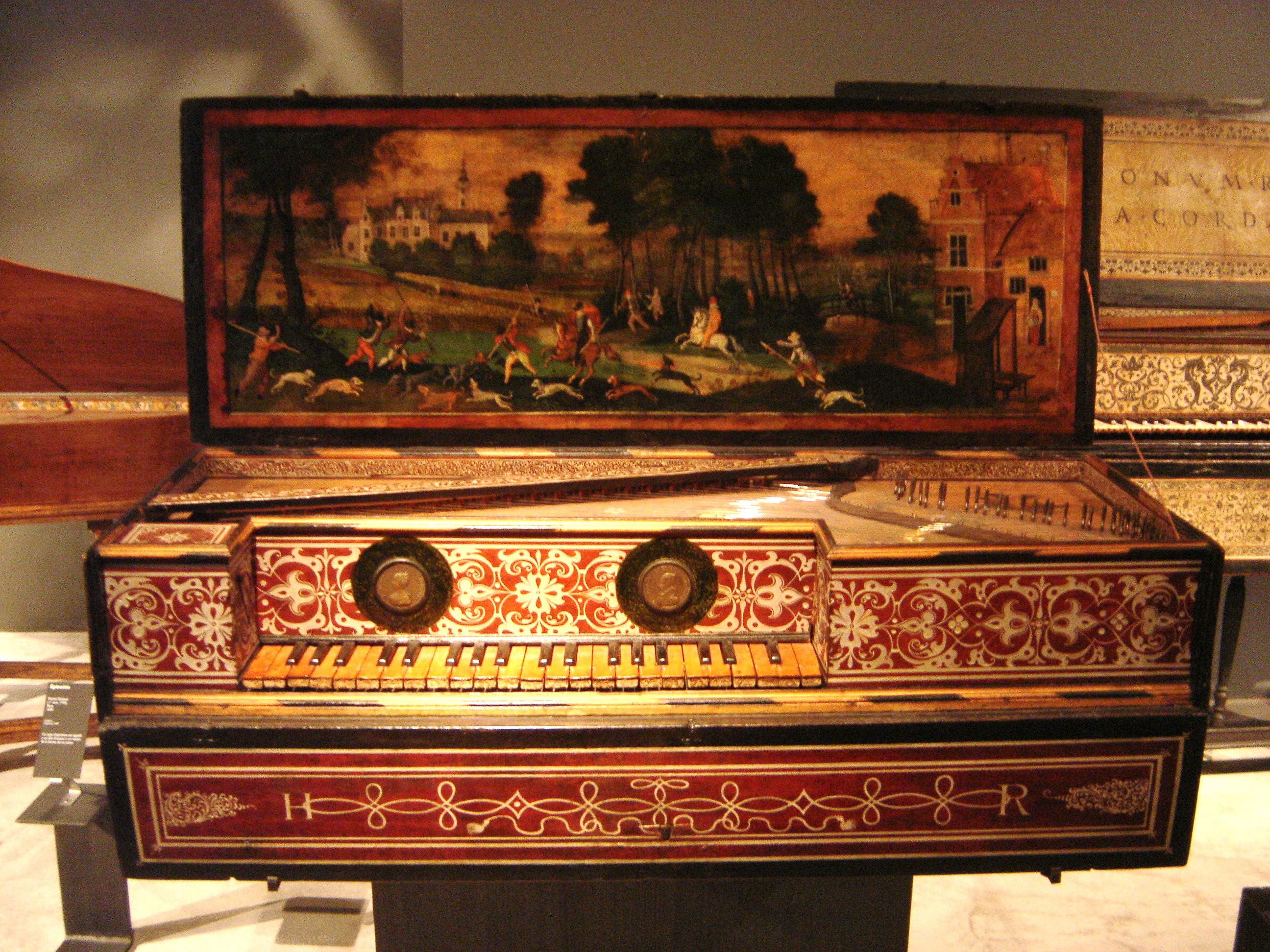
John Bull: (1562 or 1563 – 15 March 1628) was an English composer, musician and organ builder. He was a renowned keyboard performer of the virginalist school and most of his compositions were written for this medium.
Peter Philips: Peter Philips (also Phillipps, Phillips, Pierre Philippe, Pietro Philippi, Petrus Philippus, ca. 1560–1628) was an eminent English composer, organist, and Catholic priest exiled to Flanders. He was one of the greatest keyboard virtuosos of his time, and transcribed or arranged several Italian motets and madrigals by such composers as Lassus, Palestrina, and Giulio Caccini for his instruments. Some of his keyboard works are found in the Fitzwilliam Virginal Book. Philips also wrote many sacred choral works.
Keyboard tablature: Keyboard / Piano tablature is a system of tablature or musical notation written using letters and numbers that designate the timing and keys to hit on a keyboard or piano. Modern piano tablature is based on scientific pitch notation, a variation of letter notation which has roots going back to the 11th century when Italian Guido of Arezzo developed Solfege.

Second Brooke of Songs and Ayres (1600): http://www.youtube.com/watch?v=tdvb7Gt8w4g
The Second Booke of Songes or Ayres is a book of lute songs composed by Renaissance composer John Dowland and published in 1600. He dedicated it to Lucy Russell, Countess of Bedford.
Dowland's First Booke of 1597 had been a commercial success.
Lyrics:
I am aware that not every video is outstanding or whatever, but in this case, this is the only recording from this work by Dowland on YouTube, so it has some worth I would say.
I learn a lot of before unknown works to me myself with these videos, so that is my motivation to go on for a while I think.
If fluds of teares could cleanse my follies past. If fluds of teares could cleanse my follies past, And smoakes of sighes might sacrifice for sinne, If groning cries might salve my fault at last, Or endles mone, for error pardon win, Then would I cry, weepe, sigh, and ever mone, Mine errors, faults
34
, sins, follies past and gone. I see my hopes must wither in their bud, I see my favours are no lasting flowers, I see that woords will breede no better good, Then losse of time and lightening but at houres, Thus when I see then thus I say therefore, That favours hopes and words, can blinde no more.
If it were possible that floods of tears might erase my past mistakes, and that the smokey
mists of my sighs could compensate for my sins; If my cries and groans could heal my faults
once and for all, then I would cry, weep, sigh and moan all of the time, lamenting my past
errors, faults, sins and mistakes.
I see that my hopes must 'wither in the bud', and that even my best qualities are as short-lived
as the life of flowers. I see that my mere words (of complaint) will not give birth to any better
state than all the wasted time and light I have lost, except for those spent in prayer
35
. Thus,
whilst I look, I can also say that that which favours hopes and words can no longer blind me
(to the truth).


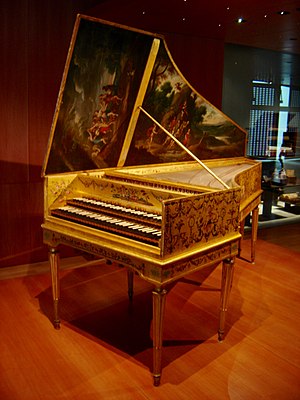
Harpsichord: A harpsichord is a musical instrument played by means of a keyboard. It produces sound by plucking a string when a key is pressed.The harpsichord was widely used in Renaissance and Baroque music. During the late 18th century it gradually disappeared from the musical scene with the rise of the fortepiano.
 Pavan: The pavane, pavan, paven, pavin, pavian, pavine, or pavyn (It. pavana, padovana; Ger. Paduana) is a slow processional dance common in Europe during the 16th century (Renaissance).
Variations: In music, variation is a formal technique where material is repeated in an altered form. The changes may involve harmony, melody,counterpoint, rhythm, timbre, orchestration or any combination of these.

Fantasia: The fantasia (from Italian: fantasia; also English: fantasy, fancy, phantasy, German: Fantasie, Phantasie, French: fantaisie) is a musical composition with its roots in the art of improvisation. Because of this, it seldom approximates the textbook rules of any strict musical form (as with the impromptu).