Renaissance
Largest ensembles – consorts of recorders or viols:
A consort of instruments was a phrase used in England during the 16th and 17th centuries to indicate an instrumental ensemble. These could be of the same or a variety of instruments. Consort music enjoyed considerable popularity at court and in households of the wealthy in the Elizabethan era and many pieces were written for consorts by the major composers of the period. In the Baroque era consort music was absorbed into chamber music.
A consort of instruments was a phrase used in England during the 16th and 17th centuries to indicate an instrumental ensemble. These could be of the same or a variety of instruments. Consort music enjoyed considerable popularity at court and in households of the wealthy in the Elizabethan era and many pieces were written for consorts by the major composers of the period. In the Baroque era consort music was absorbed into chamber music.
A music genre is a conventional category that identifies pieces of music as belonging to a shared tradition or set of conventions.[1] It is to be distinguished from musical form and musical style, although in practice these terms are sometimes used interchangeably. Music can be divided into different genres in several ways
Among the criteria often used to classify musical genres are: the trichotomy of art, popular and traditional; time period; regional and national origins; technique and instrumentation; fusional origins; and social function
Consort of recorders

composer: Merula, genre: canzona

shows a wide range of recorders of different sizes. Composer: Dowland
Consort of viols


Keyboard Instruments:
http://www.youtube.com/watch?v=N-tCTMfVmfA -
"Can you identify the Renaissance Keyboard instruments used?"
Harpsichord
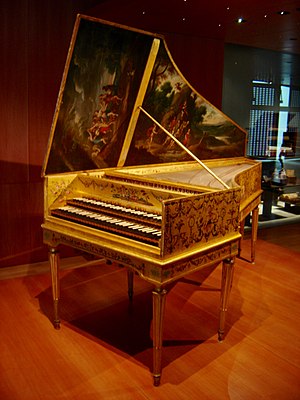 The harpsichord was widely used in Renaissance and Baroque music. During the late 18th century it gradually disappeared from the musical scene with the rise of the fortepiano.
 http://www.youtube.com/watch?v=kISvsd8PmtI
- Renaissance Harpsichord Music
http://www.youtube.com/watch?v=5B4eEcvBIek
Composer: Johan J. Agrell, Genre: Sonata (1748)
http://www.youtube.com/watch?v=qE0ddkUbgaY
Composer: Byrd, William, Genre: Fantasia harpsichord
Virginals
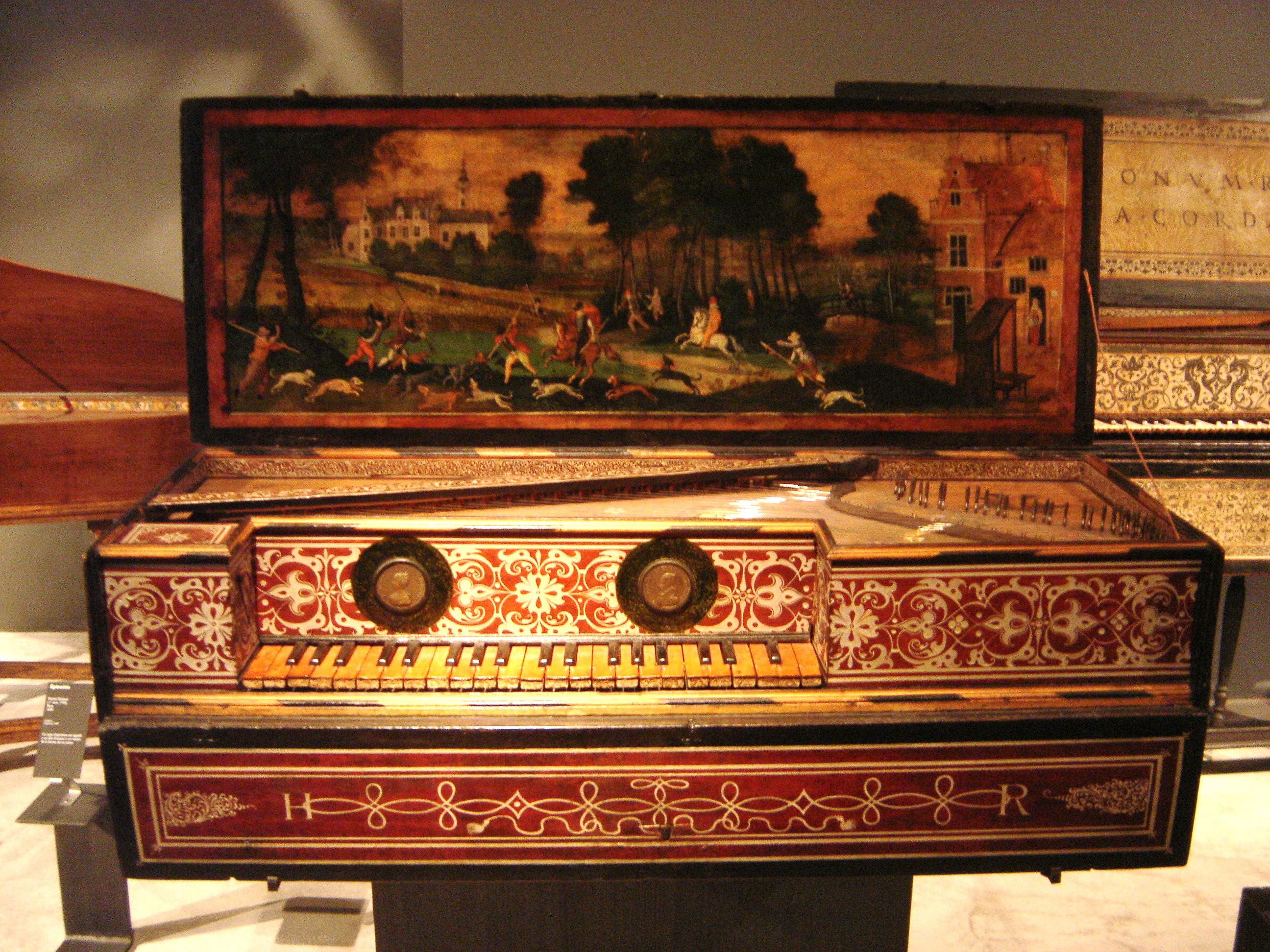 The virginals or virginal (the plural does not necessarily denote more than one instrument)[1] is a keyboard instrument of the harpsichord family. It was popular in Europe during the late Renaissance and early baroque periods.
http://www.youtube.com/watch?v=h8Z5gBFi6ZY
Composer: Anon.
Earliest piece known for Virginal
Pieces - "Lady Careys Dompe" and "Lady Wynkefields Rownde"7
Spinet
 A spinet is a smaller type of harpsichord or other keyboard instrument, such as a piano or organ.
http://www.youtube.com/watch?v=-Q3_ZOM_bHo
Composer: William Byrd, Genre:Fantasia in a, BK 13
(English renaissance; Hitchcock Spinet)
Clavicord
 The clavichord is a European stringed keyboard instrument known from the late Medieval, through the Renaissance, Baroque and Classical eras. Historically, it was widely used as a practice instrument and as an aid to composition, not being loud enough for larger performances.
http://www.youtube.com/watch?v=QKvuj-OJwYw
Composer: William Byrd Piece: My Lady Nevells ground
Pipe Organ
 The pipe organ is a musical instrument commonly used in churches or cathedrals that produces sound by driving pressurized air (called wind) throughpipes selected via a keyboard.
http://www.youtube.com/watch?v=QxRRBZZj1B8
Composer: Giacomo Fogliano Piece: 3 Ricercari
http://www.youtube.com/watch?v=8yE7VmWYGU0
Composer: Elias Ammerbach Piece: Passamezzo Nova
- played on the Hautptwerk Krewerd organ
Chamber Organ
 A chamber organ is a small pipe organ, often with only one manual, and sometimes without separate pedal pipes that is placed in a small room, that this diminutive organ can fill with sound.
 http://www.youtube.com/watch?v=mU2r2X4-dpc
Pieces and Composers:
Stanley (1712 - 1786) Voluntary no. 9 in G
Sweelinck (1562 - 1621) Mein junges Leben hat ein End
Zipoli (1688 - 1726) Elevazione in C

No comments:
Post a Comment